Peat/Turf Ash
Composition and application for fertilising trees
This byproduct of burning turf is usually seen as a nuisance and is thrown away. The ash, however, is a vital component for trees in the bog where nutrient availability is severely limited by design. Judicious application of the turf ash on plants and trees in the bogs over time provides a lot of essential macro and micro nutrients in such circumstances and is therefore a valuable resource.
Going back to the basic NPK requirements of all plants, turf ash does not have nitrogen (because it has been burnt away). Potassium and phosphorous remain in the ash. In addition, magnesium and calcium, along with trace minerals, are also present in small quantities.
For information, quite a few other minerals are also present in turf ash. Sulphur, iron, sodium and silicon as well as trace elements like zinc, are amongst them.
One note of caution. Turf ash has a tendency to increase the pH towards alkalinity, so it needs to be applied in such a way to limit run-offs from the mounds. Most plants will benefit, especially fruit and nut trees (apart from acid-loving plants such as blueberries, so do not apply).
How to apply
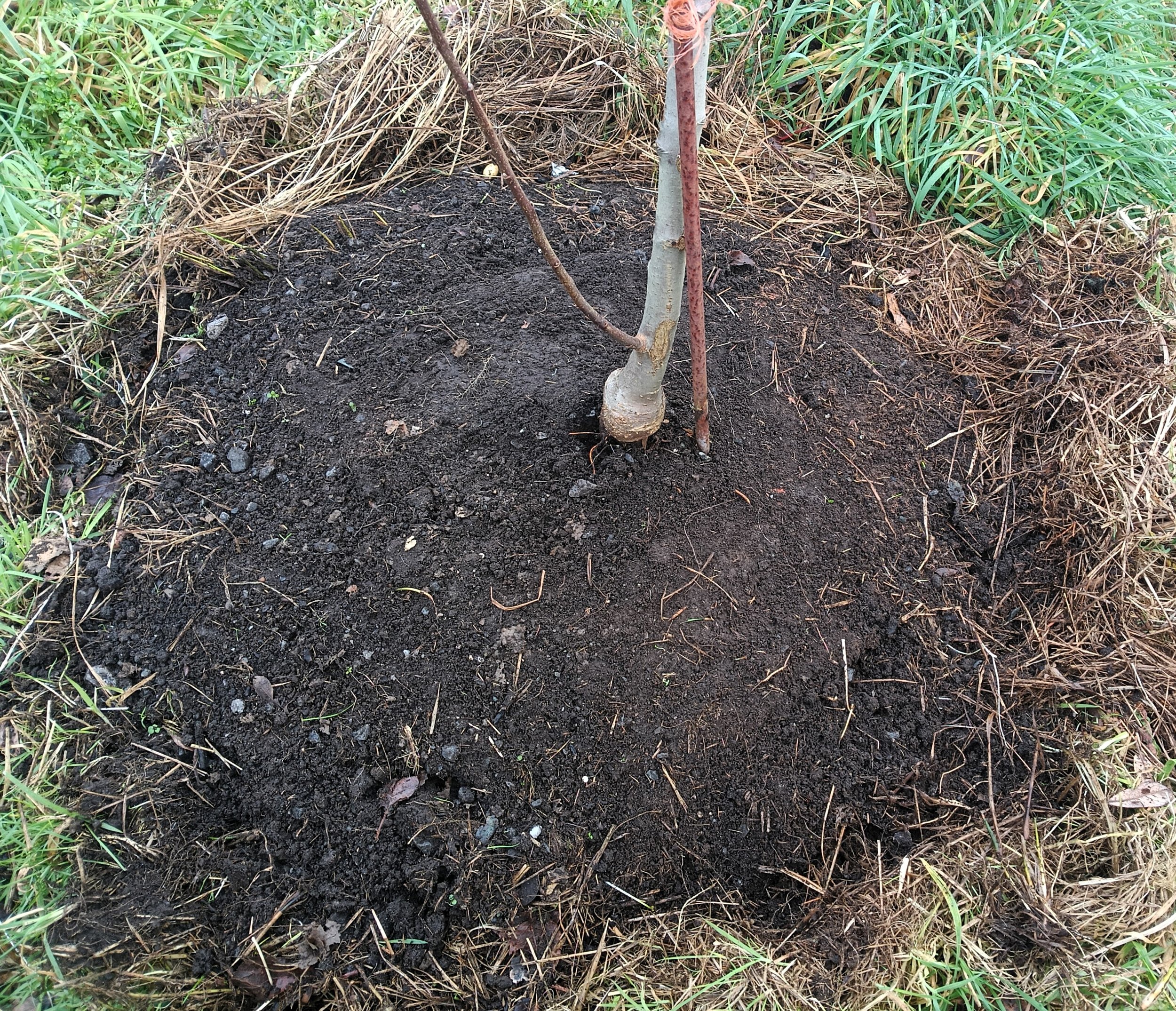
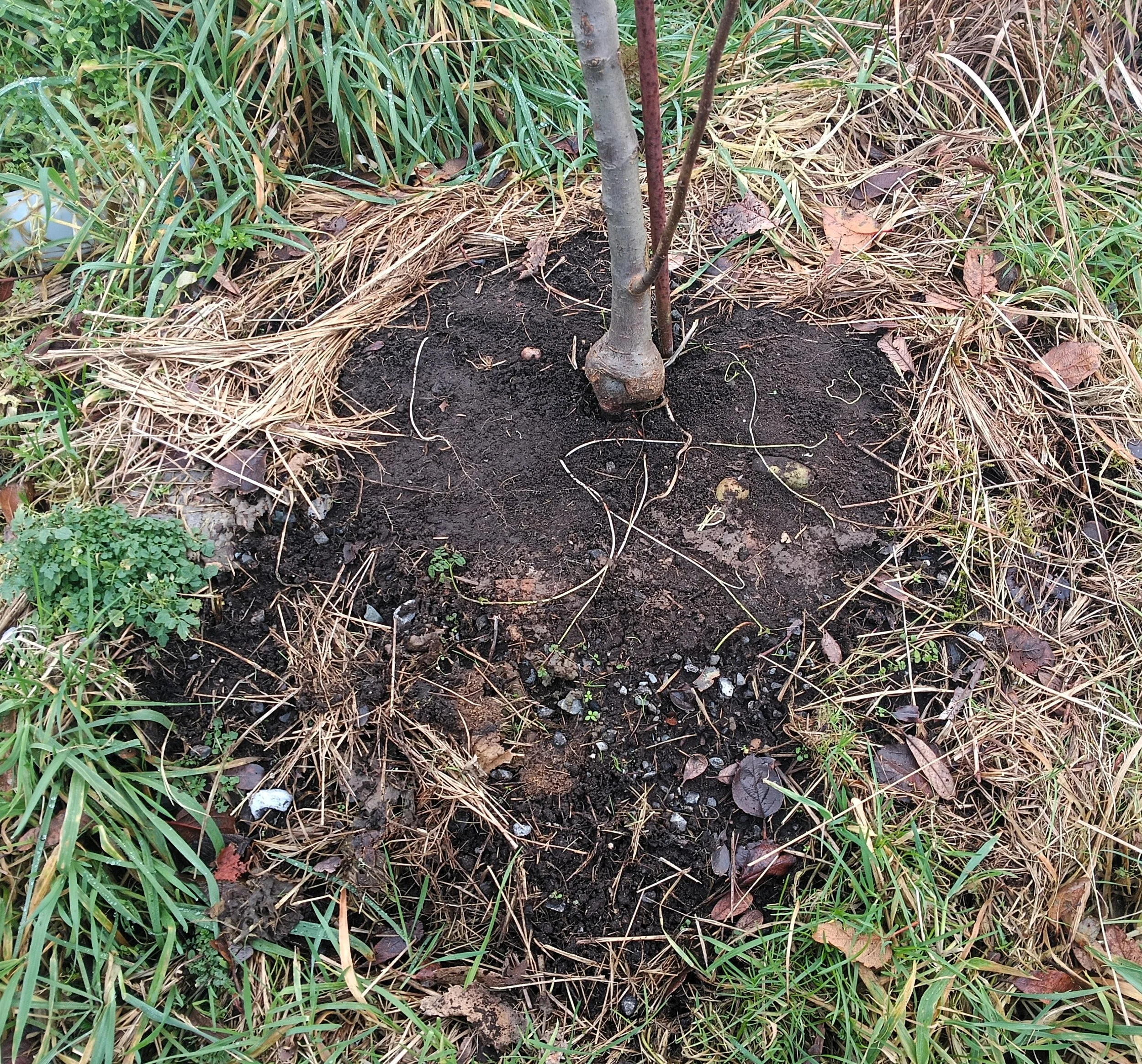
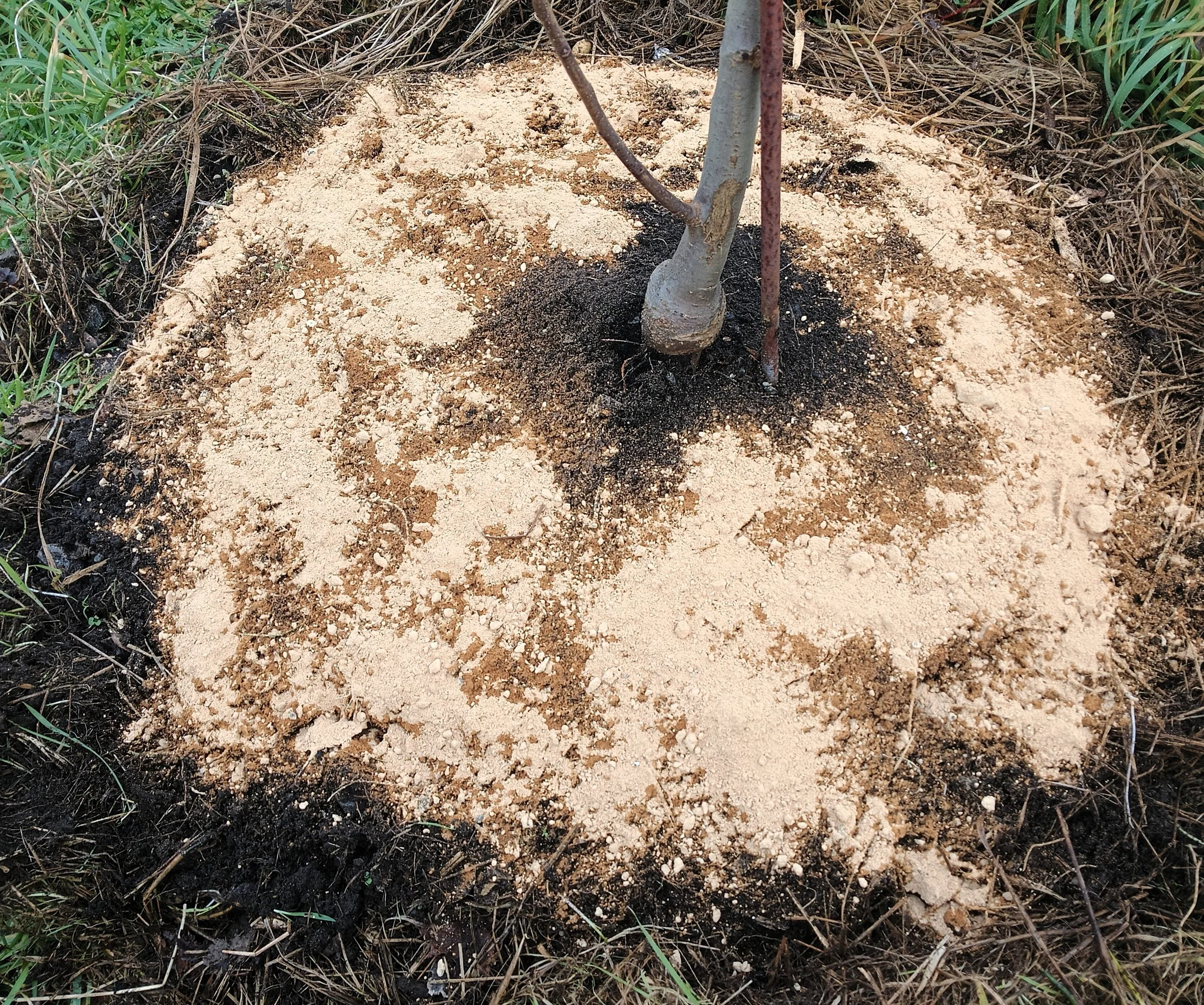
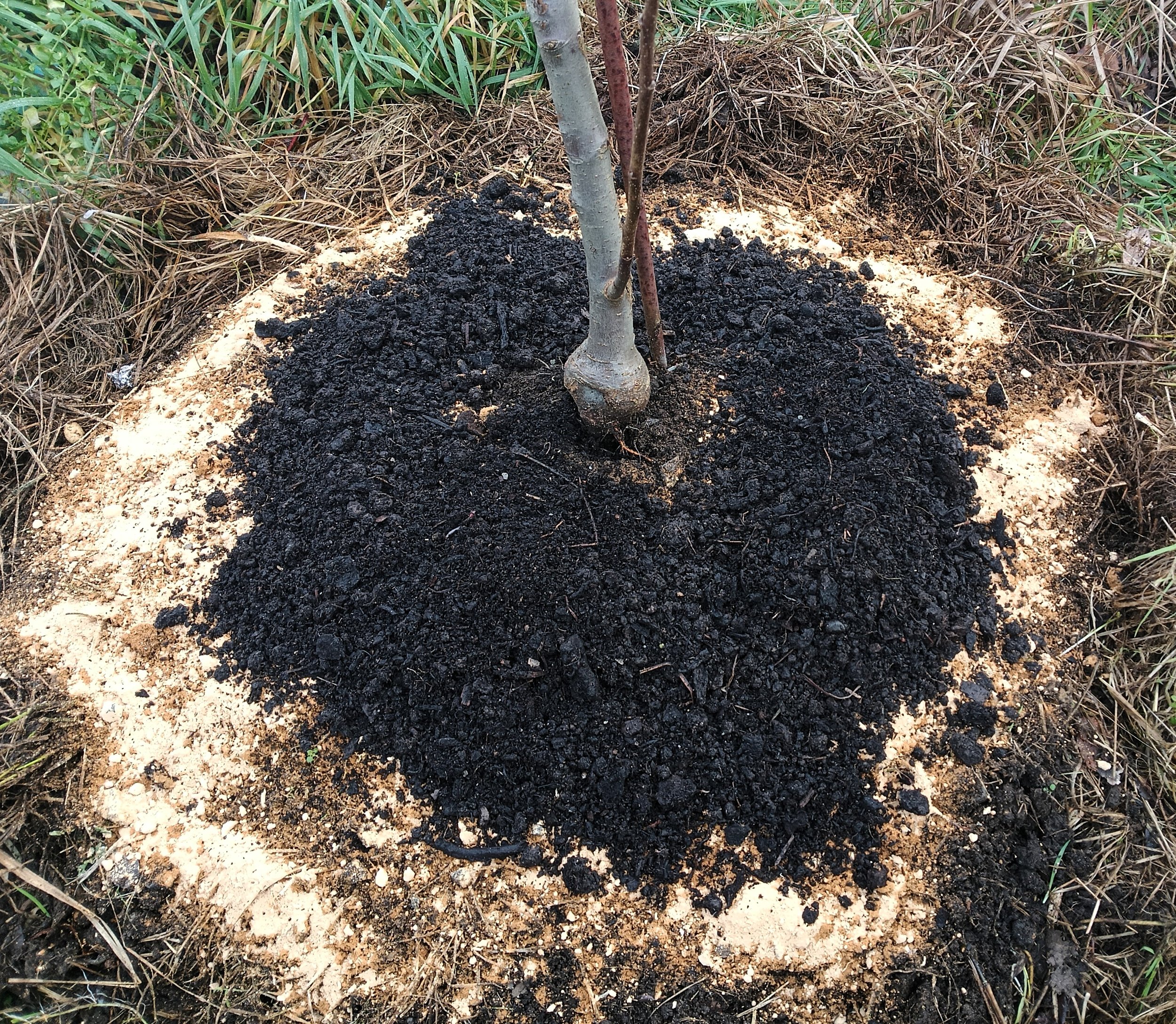
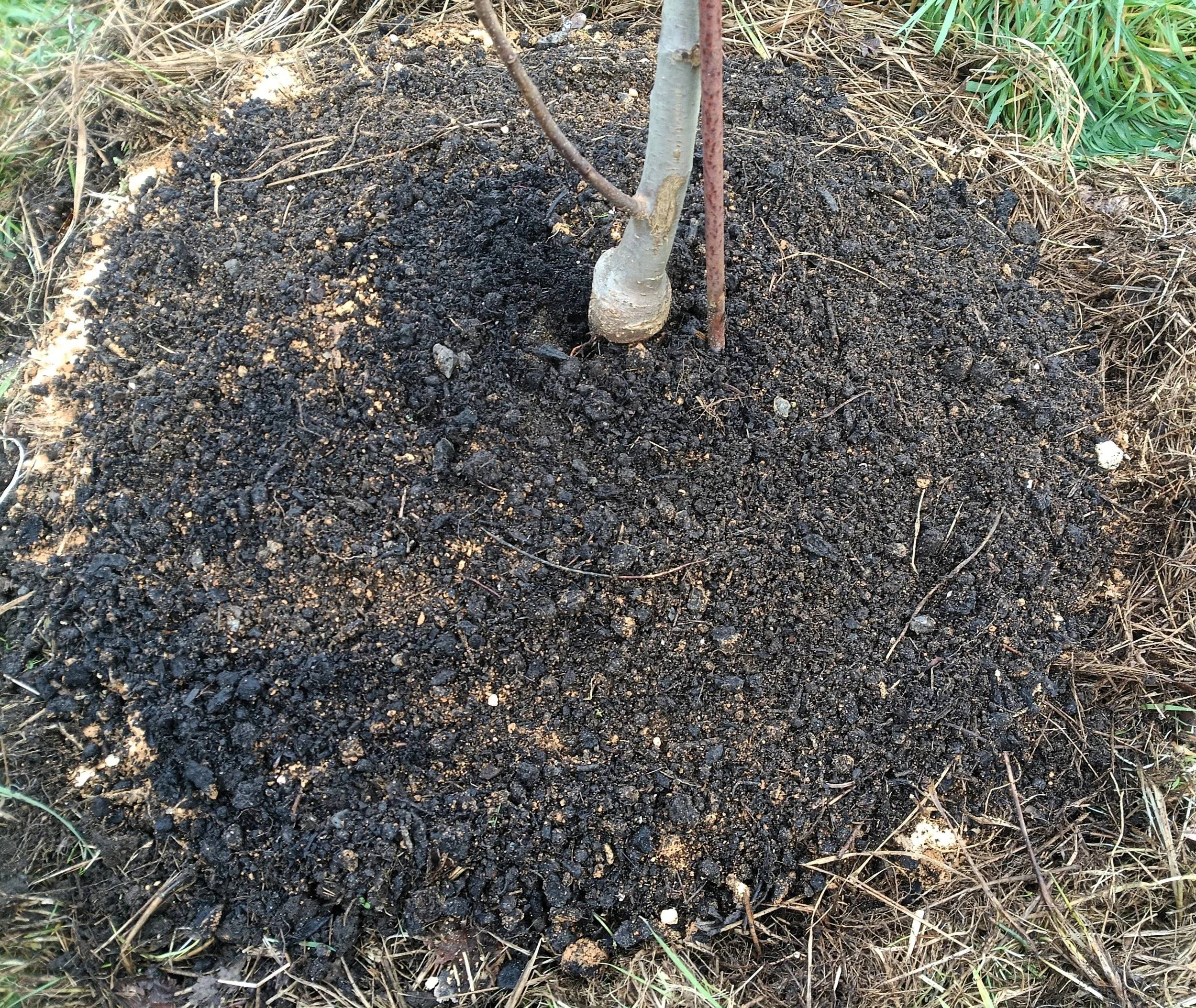
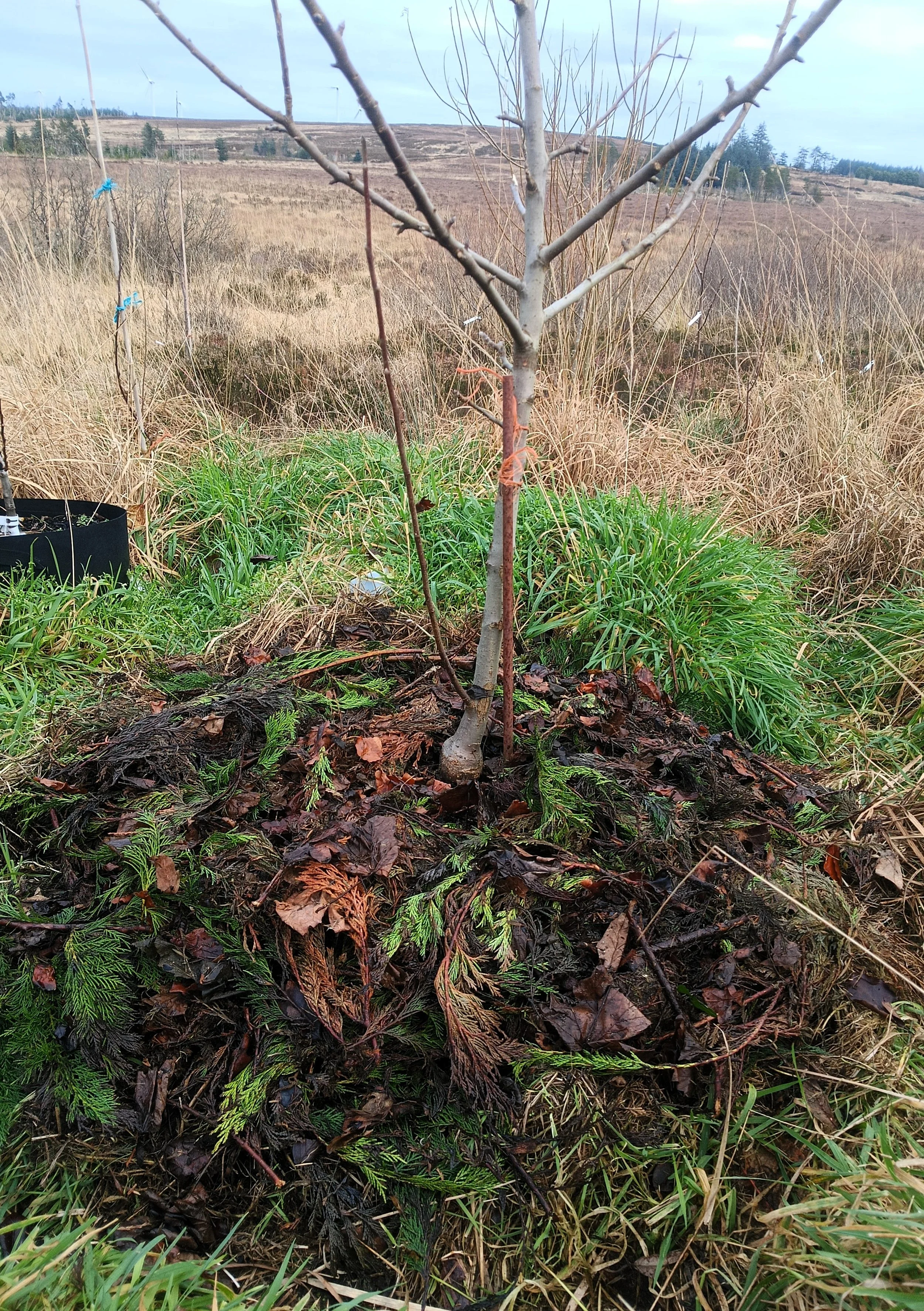
Gently remove the top layer of vegetation on the mounds. Sprinkle a handful or three of turf ash thinly on the mound, making sure that the ash does not come near the tree trunk. If you have a bit of biomass, mix it with the ash before doing this step. Then cover up the whole mound quite thickly with leaves, grass cuttings and other vegetation so that the rain will not wash it all off into the bog. Again, making sure that none of the biomass or ash is touching the trunk/ root collar of the trees. Then let Mother Nature do its work.
Timing of application
Since most people burn turf during the winter for heating, that is also the ideal time to do this fertilisation. Plants are dormant, and a little disturbance of the mounds will not cause too much damage. It is a resource, so use it wisely. Do please ensure that the ash is stored dry as soon as your stove is cleaned out each day. There is nothing worse than a wet, soggy pile of turf ash. The next opportunity for application is at the height of the growing season when the plants need fertilisation. Hence, keep the ash absolutely dry in storage.
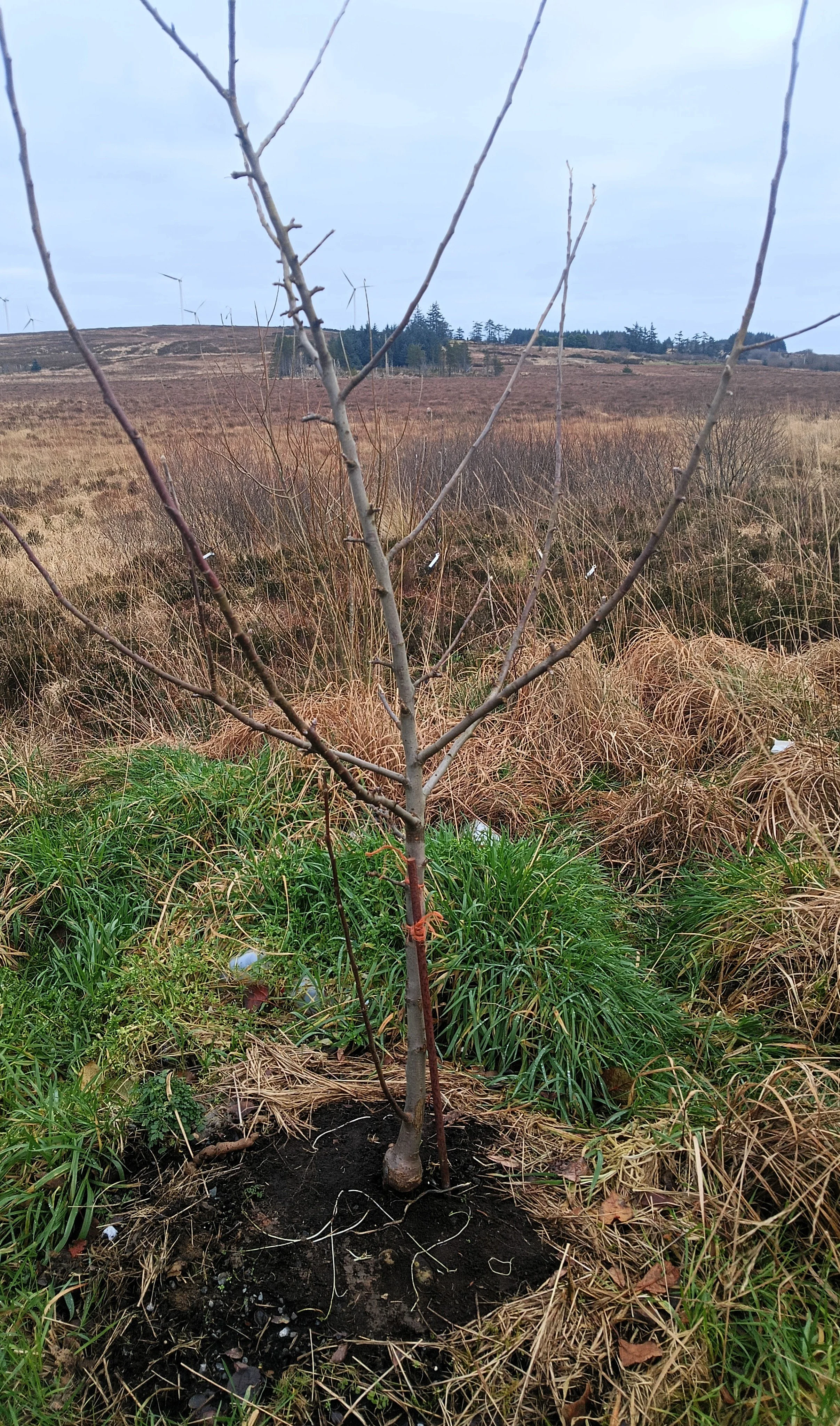
To illustrate, please see the pics as an example. The apple tree in question is an old European cultivar called Belle de Boskoop. A triploid, which is just over 4 years old, but as you can see, it is not going very far due to the fact that it is on the M26 rootstock. It produced 10 good-sized apples this year (2025). That was all I could obtain at the time; however, upon checking now, it is possible to find this cultivar on M9 dwarfing (not suitable for the bog), as well as on semi-dwarf and semi-vigorous MM106 and MM111 rootstocks, respectively.